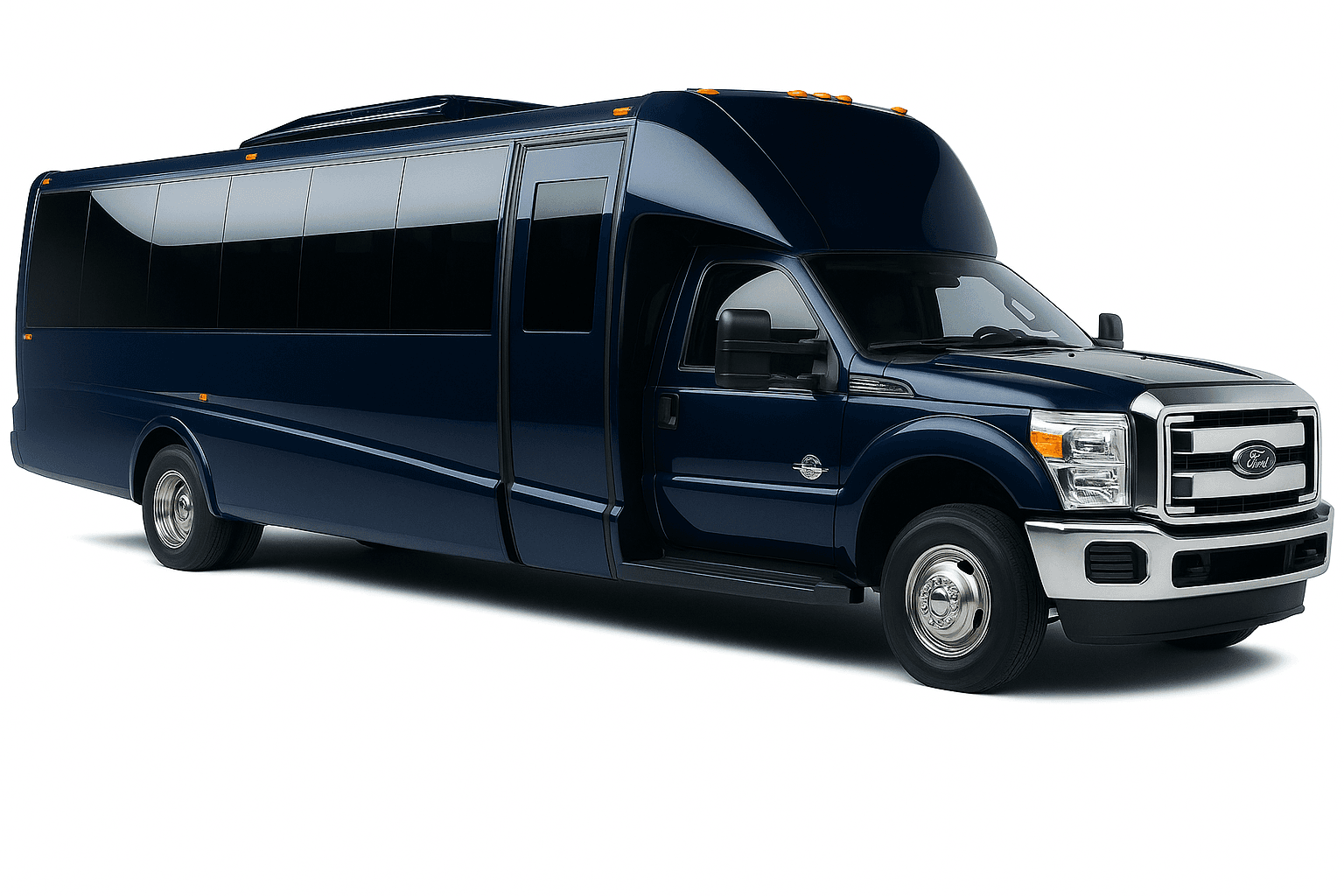
Who actually uses this? Mostly the person organizing a birthday or bachelorette who has been asked how many hours to book and has no idea. Time and duration questions come up in about 38% of the sales calls we have analyzed, usually phrased as some version of how many hours do we need. Groups heading from a Round Rock or Cedar Park pickup to dinner on South Congress and then Rainey Street use it to see why a four-hour block might not cover everything. Corporate planners use it to check whether a Domain happy hour, a dinner downtown, and a return to a hotel fit before a hard stop.
Treat the output as a starting point for the plan, not a schedule carved in stone. If the end time surprises you, cut a stop or move the pickup earlier rather than assuming you can squeeze it. Once we know the pickup address, where you're going in order, and the hours you want to reserve, the price we send will spell out the reserved window, and once that is set, adding time on the night is only possible if the vehicle has no booking behind yours.
Why 90 minutes per stop is the right default in Austin
Ninety minutes sounds like a lot until you break it down. A group of 18 does not step off a bus and into a bar in one motion. Someone is finishing a drink, two people are in the restroom, and the driver needs a legal place to stage. On East 6th Street on a Friday night the bus may need to loop the block while everyone gathers. Add ten minutes for the walk in, ten to order, an hour of actual hanging out, and ten to round everyone up, and you are at 90 minutes before the wheels move.
Some stops run shorter and some run longer. A photo stop at the Texas State Capitol grounds or the murals on South Congress is 20 minutes. A sit-down dinner on West 6th or a brewery tasting in Dripping Springs is closer to two hours. The planner uses one average because most nights mix the two. If your itinerary is heavy on long stops, bump your stop count up by one to build in the difference. If it is mostly quick hits, you have slack you can spend on a later end time or an extra pickup.
The two-hour base covers pickups, transitions, and the ride home
The fixed two hours in the formula is not padding for its own sake. It accounts for the first pickup, which is where most timelines slip. If the bus arrives at a house in Pflugerville at 6:00 and half the group is still getting ready, you have burned 20 minutes before the first stop. Multiple pickups make this worse: a second pickup in Mueller and a third at a hotel near the Convention Center can quietly eat 45 minutes of the reserved window.
The base also covers the end of the night, which is the part everyone forgets. Getting from Rainey Street back to a Lakeway pickup point is 30 to 40 minutes at midnight, and closer to an hour if I-35 has a lane closure. Groups scattered across town need drop-offs in order, and the driver can only do them one at a time. If your group is spread from Kyle to Georgetown, the two-hour base is thin; ask the group to consolidate to one or two meeting points and the timeline gets much more honest.
Want a number for your actual date?
The estimate gets you in the right range. The price we send you is the one that counts.
Matching your timeline to how Austin groups actually book
In our booking data, 4 hours is the requested duration on 71% of inquiries with a usable trip length, and Austin trips average about 5 hours. Run the planner with two stops and you get 5 hours, which lines up with what most groups end up needing. Run it with one stop and you get 3.5 hours, which is a dinner-and-back run or a concert drop at Moody Center with a return pickup. Run it with four stops and you are at 8 hours, which is a full Hill Country day, not a night out.
The mismatch that causes trouble is the group that wants four stops on 6th Street and Rainey but only budgets four hours. The math says 8. The realistic fix is to pick the two stops that matter most, book five hours, and let the night breathe. When a group calls us with a 4-hour request and a 6-stop wish list, this is the conversation we have, and the planner lets you have it with your friends before you ever submit a form.
- ✓1 stop from the pickup: about 3.5 hours (dinner, a show, an airport run with a wait)
- ✓2 stops: about 5 hours (dinner plus one bar district, the most common Austin night)
- ✓3 stops: about 6.5 hours (dinner, Rainey Street, 6th Street, home)
- ✓4 or more stops: 8 hours and up (brewery tours, Lake Travis days, wedding-day shuttles)
Austin traffic windows that break a timeline
The 15 to 20 minute buffer the widget suggests is the minimum. Certain windows in Austin need more. A 5:30 p.m. weekday pickup anywhere along MoPac or I-35 means crawling; push the pickup to 6:30 or accept that the first stop is shorter. UT football Saturdays close streets around DKR Texas Memorial Stadium for hours before kickoff and lock up the north side of downtown after the game. During SXSW in March and both ACL weekends in October, the blocks around Zilker and the Convention Center become a different city.
Events at Q2 Stadium and Circuit of the Americas have their own patterns. Q2 releases 20,000 people onto Burnet Road and Braker Lane at once, so a post-match pickup needs a staging point a few blocks away and 30 extra minutes. COTA on F1 weekend is a two-hour exit for cars; buses fare better in the dedicated lanes, but the timeline should still assume a slow crawl to TX-71. If your date lands on any of these, add a full extra hour to whatever the planner shows and mention the event in your quote request so we can flag the routing.
Turning the estimate into a reserved window
Once the planner gives you a start, a duration, and an end, round the duration up to the next whole hour and use that as the hours on your quote request. Vehicles are reserved in whole-hour blocks, and a 6.5-hour estimate booked as 6 hours leaves you paying for overtime at the worst possible moment. Booked as 7, the extra half hour becomes your traffic cushion instead of a surprise.
It helps to have the stops in order with rough addresses, and to run that past the group before it reaches us. A plan that everyone has already agreed on avoids the mid-ride debate about whether to detour to a bar in East Austin nobody had mentioned. Route and stop questions come up in about 14% of the sales calls we have analyzed, and nearly all of them resolve faster when the organizer already knows the order of stops. Your confirmation will list the pickup window and reserved hours; the exact vehicle unit is confirmed there.