๐Ÿ ๐Ÿ“ž Call Now
Chat with us! ๐Ÿ’ฌ
๐Ÿ‘ฅ Free Austin planning tool ยท Vehicle & Group

Which Size Vehicle Fits Your Austin Group? Enter a Number and Find Out

Give the recommender a number between 5 and 60 and it hands back a vehicle from the fleet whose capacity fits that many people, along with its seat count and a link to the fleet page. The logic works in bands. Eight or fewer people get a small vehicle in the 8- to 10-seat range. Nine to 15 people get something in the 16- to 20-seat range. Sixteen to 25 get the 26- to 30-seat range. Twenty-six to 35 get 36 to 40 seats. Anything larger points to a 50-seat coach. The vehicle it names is the first fleet entry in that band, so read the result as a seat count first and a specific vehicle second.

Use the group size recommender

We recommend

26 Passenger Shuttle Bus

Fits 26 passengers

View details โ†’

Want the real number?

Tell us the date and how many are coming, and we'll price the actual trip.

We use what you send here only to get back to you about your ride.

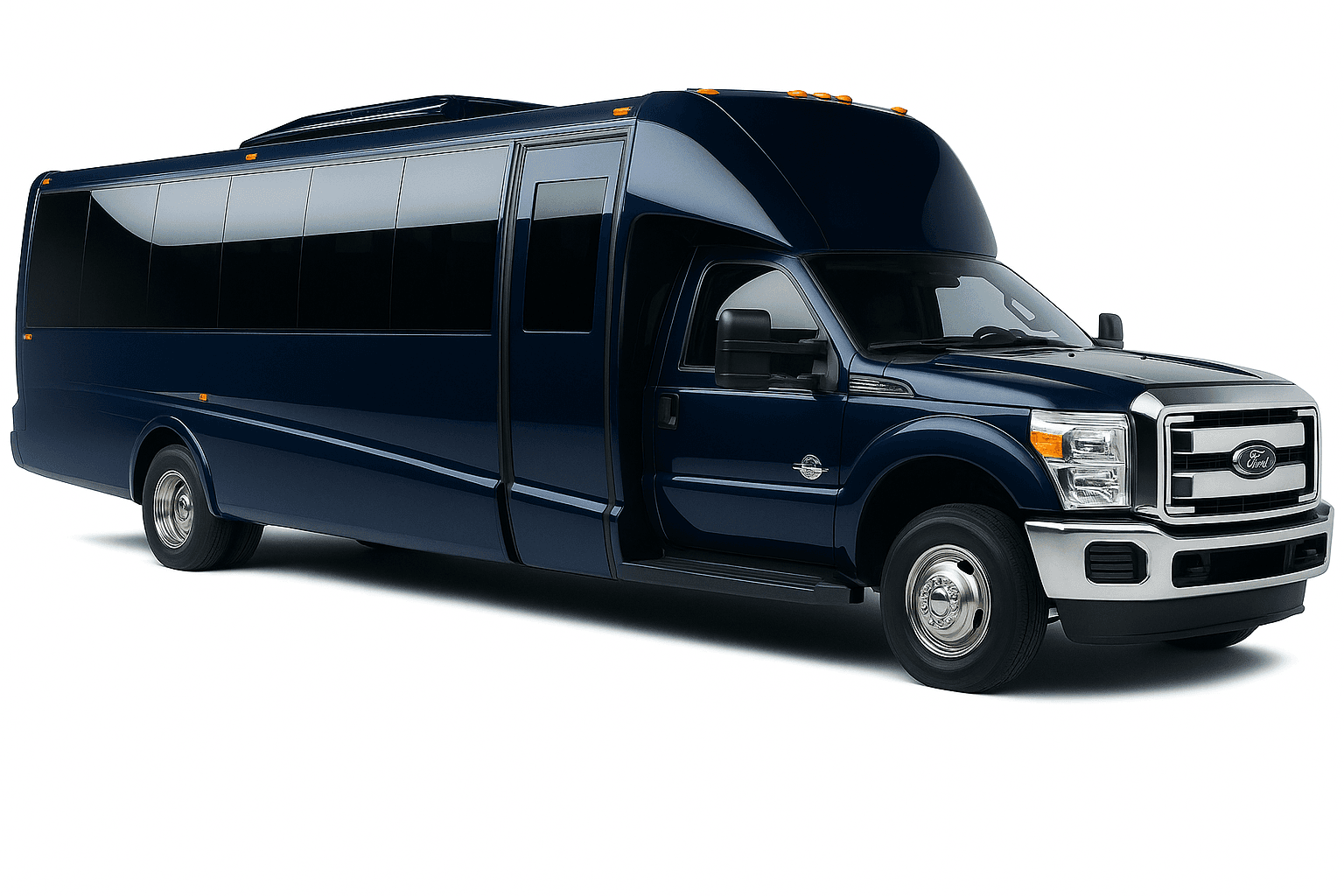
24 passenger party bus exterior
  1. 1Enter passenger count
  2. 2Review the recommended vehicle
  3. 3Open fleet details
  4. 4Ask us for a price on your date

What Austin groups actually ask for

Numbers from our own Austin inquiry records and booking data, so the estimate you just ran sits next to what other groups planned.

median group size for Austin requests
15median group size for Austin requests
of Austin requests are groups of 11โ€“15
32%of Austin requests are groups of 11โ€“15
of Austin groups list 11โ€“20 passengers
54%of Austin groups list 11โ€“20 passengers
of Austin groups run 21โ€“30 passengers
17%of Austin groups run 21โ€“30 passengers

Source: Austin Party Ride inquiry records, July 2023 through August 2026. Percentages are rounded.

This is the question behind about 25% of the sales calls in our booking data, usually from someone hovering between two sizes: "we are 19, maybe 22, does that change the bus?" Austin groups cluster hard in the middle. In our Austin inquiry records, 54% of groups that told us how many were coming list 11โ€“20 passengers, and 17% list 21โ€“30, which means most people using this tool are deciding between a 16- to 22-seat vehicle and a 24- to 30-seat one.

Take the seat count the tool gives you and then choose the style. A 16-passenger band could be a 16-passenger party bus, a 14-passenger limo sprinter, or a 16-passenger Excursion limo depending on whether the night is a Rainey Street crawl, a Hill Country tasting, or a prom arrival. Then open the fleet page, check the amenities, and tell us how many are coming and which vehicle you prefer. The exact unit is confirmed on the price we send.

Reading the recommendation as a band, not a verdict

The tool answers with one vehicle name, but the useful information is the capacity range it belongs to. Fleet entries are listed with executive sprinters first, then shuttle buses and coaches, then limo sprinters, party buses, and limousines, so the vehicle named is often a shuttle bus. A shuttle is the right call for a rehearsal dinner transfer or a corporate airport run, but a bachelorette wants LED lighting, a sound system, and wrap-around seating, and that means the party bus of the same seat count.

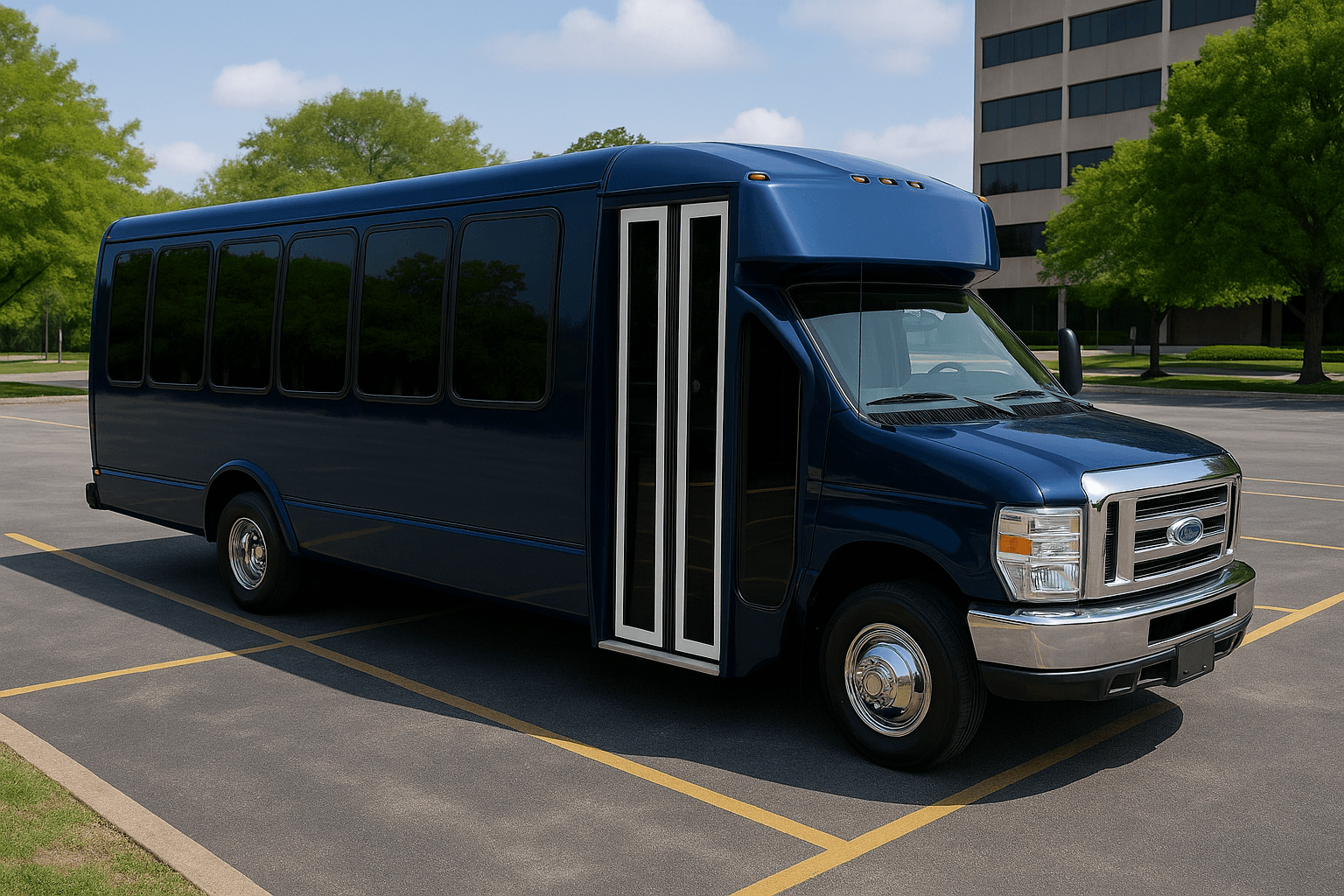
So the workflow is: read the seat count, then pick the style. For 12 people, the tool points to the 16-seat band. Within that band you have a 16-passenger party bus, a 16-passenger shuttle, a 14-passenger limo sprinter, or a 14- or 16-passenger SUV limo. For 24 people, the band is 26 seats, which is a 26-passenger party bus or a 26-passenger shuttle. For 42, the tool jumps to a 50-seat coach, though a 44- or 46-passenger shuttle or a 45-passenger party bus may fit as well.

Why 2โ€“4 seats of breathing room changes the answer

A vehicle rated for 20 passengers fits 20 people. It does not fit 20 people plus three coolers, a stack of garment bags, and a bachelorette's decorations with any comfort. We usually suggest planning for 2โ€“4 seats of headroom, which means a group of 18 is happier on a 20- or 22-passenger bus than on an 18. The recommender builds some of this in by sending 9โ€“15 people to the 16-seat band and 16โ€“25 to the 26-seat band, but at the top of each band you are close to full.

Where this matters most in Austin is formalwear and gear. Prom groups in April board in dresses that take up more room than jeans, and the median prom inquiry in our booking data is for 16 passengers, right at a band edge. Lake Travis days involve towels, bags, and coolers for everyone. A Hill Country wine tour ends with cases of bottles that need a place to ride home. A UT tailgate means chairs, a canopy, and a cooler or two.

  • โœ“Coolers and ice chests: plan one seat per large cooler
  • โœ“Formalwear: prom, quinceaรฑera, and wedding groups need more room per person
  • โœ“Lake and river gear: towels, bags, and dry clothes take space on the return
  • โœ“Purchases: wine, brewery growlers, and shopping from South Congress ride home too

Want a number for your actual date?

The estimate gets you in the right range. The price we send you is the one that counts.

Small groups: when 8 or fewer should skip the bus entirely

Enter 8 and the recommender returns an 8-passenger executive sprinter. That is the tool telling you a bus is more vehicle than you need. About 20% of Austin inquiries that told us how many were coming are for 10 or fewer passengers, and for those groups the choice is among a stretch limo, a limo sprinter, or an executive sprinter, each with a different feel. A Chrysler 300 or Lincoln stretch with a wet bar and privacy divider suits an anniversary dinner or a night at the Paramount. A 10-passenger limo sprinter has the lighting and bar of a party bus in a smaller cabin. An executive sprinter with WiFi and USB is the airport or corporate option.

Small groups pay more per head because a vehicle minimum is split fewer ways. Historically, groups of 10 or fewer in our booking data have seen a median of about $175 per passenger, the highest of any size range. That is not a reason to avoid it, but it is a reason to be clear about what you are buying: the arrival and the experience rather than the savings.

The 11โ€“20 middle: where most Austin groups live

More than half of Austin groups fall between 11 and 20, and it is the band where style matters most because every vehicle type has an option here. Party buses at 16, 18, 20, and 22 seats. SUV limos at 14, 16, 18, 20, and 22. Limo sprinters at 12 and 14. Shuttle buses at 16, 18, and 20. The recommender sends 9โ€“15 people to the 16-seat band and 16โ€“25 to the 26-seat band, so a group of 17 will see a larger vehicle than a group of 15 even though they are close in size.

For 16 to 20 people, that larger recommendation is worth considering rather than fighting. A 20-passenger bus with 18 riders and gear is comfortable; a 20-passenger bus with 20 riders and gear is full. A 22- or 24-passenger bus gives that group room to move around on a 5-hour Saturday, which is the average Austin trip length. If the budget is the constraint, a 20-passenger party bus at 17 or 18 riders is a reasonable compromise.

The median wine-tour inquiry in our booking data is for 14 passengers, the median bachelor or bachelorette group is 12, and the median birthday group is 15. All three sit in this band, and all three are well served by a 16- to 20-passenger party bus or a 14-passenger limo sprinter depending on the route and the mood.

Large groups: when the tool says coach and what that means

Enter 36 or more and the recommender jumps to a 50-passenger coach. That reflects a real shift in how big groups move. Only about 7% of inquiries in our booking data are for 31 or more passengers, and at that size shuttle buses and coaches replace party buses because they carry more people per vehicle, usually with luggage space and, on full coaches, a restroom and reclining seats. The per-seat figure drops sharply: full-size coach quotes in our booking data have historically worked out to a median of about $45 per passenger.

The tradeoff is atmosphere. A coach is forward-facing seating with climate control and overhead storage, not a rolling lounge. For a 45-person wedding guest shuttle between a downtown hotel and a Dripping Springs venue, that is exactly right. For a 40-person birthday that wants a party on the way to 6th Street, a 40- or 45-passenger party bus keeps the bus-party feel, and the multi-vehicle calculator can show whether two 20-passenger buses work better.
Worked examples from Austin groups

Realistic scenarios run through this tool, with the decision each group made next.

Bachelor group of 12 heading to Rainey Street on a Saturday

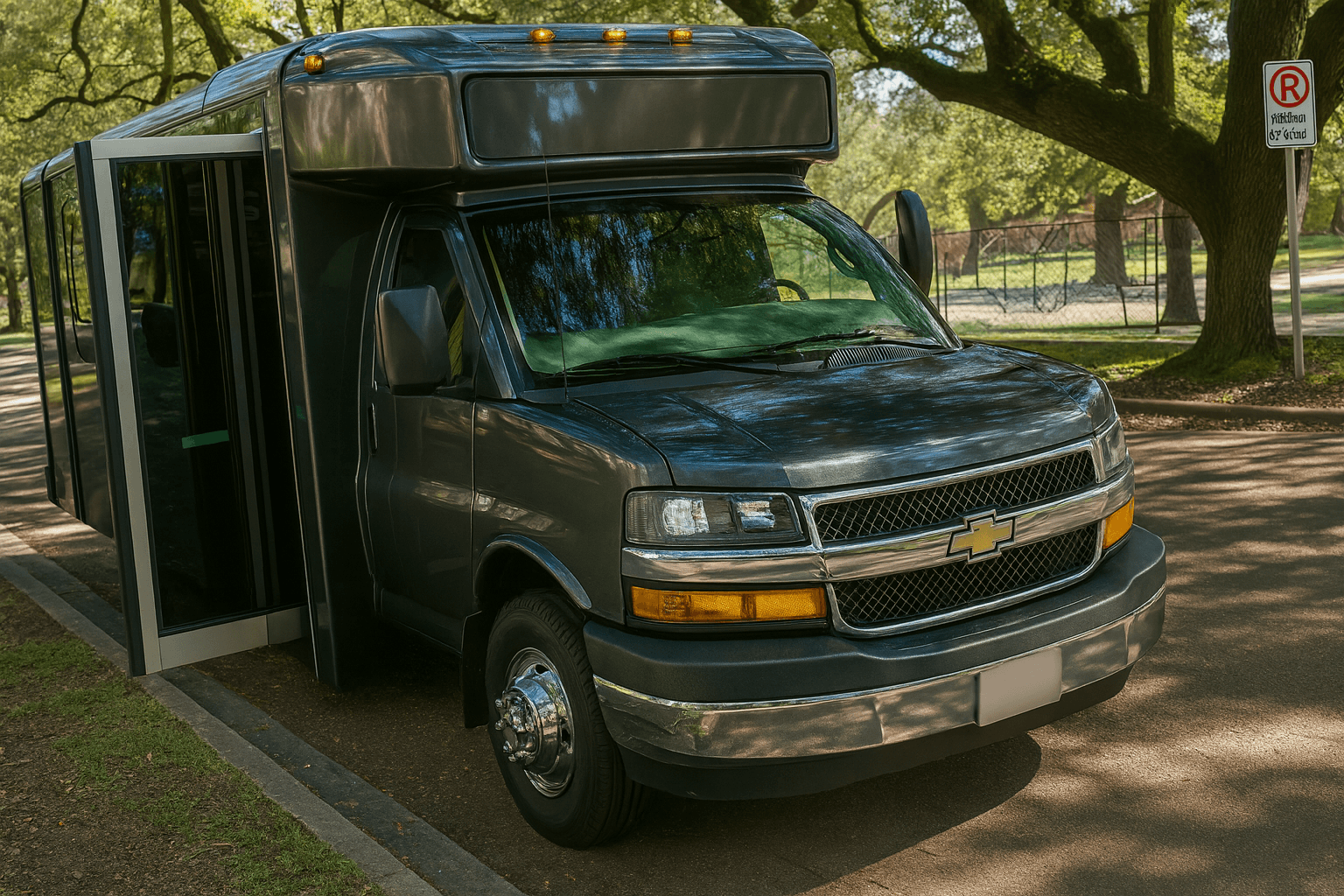
Setup: Enter 12. The recommender lands in the 16-seat band and names the first fleet vehicle there, a 16-passenger shuttle bus, with a link to its page.

Result: Read that as "16 seats." For a Rainey Street night this group wants a 16-passenger party bus or a 14-passenger limo sprinter, both in the same band with lighting, sound, and a bar. Twelve riders on 16 seats leaves room for a cooler and a couple of late additions. Put "12โ€“14 people, party bus or limo sprinter" on the quote request.

Company outing of 24 from The Domain to a Round Rock Express game

Setup: Enter 24. The tool returns a vehicle in the 26-seat band, which covers 26-passenger party buses and 26-passenger shuttle buses.

Result: Twenty-four on 26 seats is tight if people bring bags and tailgate gear, so run it again at 27 and see the 36-seat band appear. For a game day with chairs and coolers, a 28- or 30-passenger bus is more comfortable. Since about 17% of Austin groups sit in the 21โ€“30 range, both sizes are heavily requested on Saturdays and worth booking early.

Wedding guest shuttle for 42 between a downtown hotel and a Dripping Springs venue

Setup: Enter 42. The recommender jumps to the coach band and names a 50-passenger coach bus.

Result: For a shuttle job, a coach or a 44- to 46-passenger shuttle bus is the right style: forward-facing seats, luggage space, climate control. If the couple would rather keep guests in a party atmosphere, a 45-passenger party bus fits too. Wedding inquiries in our booking data arrive a median of 103 days ahead, so this is a request to send early, ideally with the ceremony and reception times attached.

Austin Party Ride polls

Polls that pair with the group size recommender

Vote on how other groups handle the same decision, then compare with your estimate.

Party Buses

Tap an answer to vote. Results update as soon as you vote.

What is the best way to decorate a party bus for a special occasion?

9 votes

How often do you use party buses for events in your city?

5 votes

How do you prefer to share music on the party bus?

10 votes

How long do you typically rent a party bus for a night out?

19 votes

Want the whole list? Visit the polls page or check the poll results.

Group Size Recommender questions

Straight answers about how the estimate works and what changes it.

No. The recommender names the first fleet vehicle in your seat band, and shuttles are listed before party buses. Treat the result as a seat count. If it shows a 26-passenger shuttle, the 26-passenger party bus is the same size with LED lighting, a sound system, and a wet bar. Say which style you want on the quote request.
Twenty on a 20-seat bus works, but it is full, and full gets uncomfortable over a 5-hour Saturday with coolers and bags. We usually suggest 2โ€“4 seats of room, which points to a 22- or 24-passenger bus. If the budget is fixed, the 20 is fine; if two people are still maybes, the larger bus removes the risk.
Both exist at 16 and 18 seats, and the median prom group in our booking data is 16, so it comes down to preference. An Excursion or Escalade limo makes the arrival at the venue the moment. An 18-passenger party bus gives more room to move in formalwear on the ride from Cedar Park or Round Rock. Ask for both on the quote and compare.
No. Rated capacity is the number of seats, and every rider needs one. Nine people move you into the next band, which in the fleet means a 10-passenger limo sprinter, a 10-passenger stretch limo, or a 10-passenger executive sprinter. Enter your realistic count, including the friend who "might" come, so the recommendation reflects who actually boards.
Thirty lands in the 36-seat band, which gives room for the cases of wine that ride home from Dripping Springs and Johnson City. A 30-passenger party bus at 30 riders is full before the first winery. Wine-tour groups in our booking data plan a median of 33 days ahead, so there is usually time to compare a 32- or 34-passenger bus against a 36.
Above 35 people the tool moves to the coach band because that is where most large-group requests end up: only about 7% of inquiries in our booking data exceed 30 passengers, and those usually want luggage space and forward-facing seats. If you are at 38โ€“42 and want a party atmosphere, a 40- or 45-passenger party bus exists; use the vehicle comparison tool to see it side by side.
It does not. The recommender only matches your group size to a capacity band in the fleet list; it has no knowledge of the calendar. Availability depends on your date, and Saturdays in April, May, September, and October are the tightest. The specific vehicle is confirmed on the price we send once we have your date and pickup.
The multi-vehicle calculator. Above 60 the answer is a combination, usually a coach plus a party bus or two large buses, and the timing of pickups matters as much as the seat count. For a wedding, the wedding transportation planner also estimates guest shuttle counts. We will need the total number of guests and the venue addresses to price it.

Get a quote after using the group size recommender

Tell us what the calculator gave you and we'll match it to a real bus and a real price.

We use what you send here only to get back to you about your ride.

๐Ÿ“ž Call NowGet Free Quote โ†’